THE BACKGROUND
The second half of the 15th century saw the introduction of sugar cane in Madeira and the Canary Islands. There was huge demand for this exotic product in Europe and as a result the lushest Canary Islands became known as the «Sugar Islands». Sugar mills, washing houses and boilers, customs houses, defensive castles and beautiful manor houses, in the style of small palaces were built, with farmhouses in the style of the areas where the colonists came from recreated for the new inhabitants. The white and refined sugars, honeys, second honeys, alfeñiques (long or twisted confection made from sugar cane and other ingredients) and honey soups produced from the cane built a sweet bridge, with solid pillars nailed deep into the Atlantic Ocean, from the Canary Islands to the European continent, with connections to Africa and the Americas.
At the end of the 19th century, and most probably with the arrival of the submarine telegraph cable on the Los Silos coast in 1883, which was laid by a British telegraph company, sugar cane cultivation, first introduced to Daute (an area in the northwest of Tenerife), by the visionary Alonso de Lugo to the islands at the end of the 15th century, reappeared.
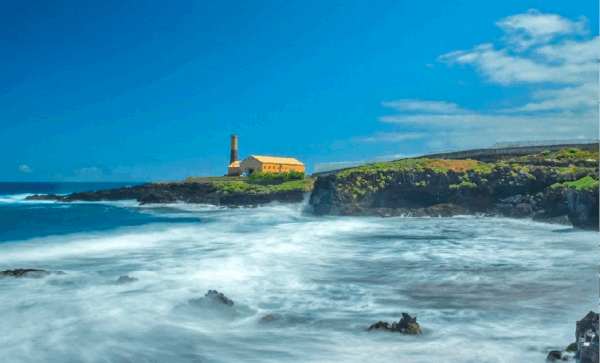
The Lathbury Company (L&Cº) planted sugar cane on the Daute Estate, the same lands where sugar cane had been originally grown 400 years before. They built the sugar mill that can be seen today on the Los Silos coast, which is one of the few 19th century buildings constructed by the British company still standing in the Canary Islands today.
The building boasts the wooden beams with the company stamp and the destination of “Dante” which was used in British ports because the fourteenth century poet was much better known than
Daute.
We now find ourselves in the area with the only existing sugar mill in Tenerife and in the very same place where sugar cane was reintroduced to where it was first planted after the conquest of Tenerife by the Spanish nobleman Alonso de Lugo towards the end of the fifteenth century. Sugar cane production was slowly replaced in the 16 th century by vineyards for wine production and then by tomato production. Lathbury & Co planted sugar cane again in the 19th century until it was supplanted by banana plantations in the 20th century.
Sugar cane had been grown all over this area since the 1500s, and started to be replaced for different crops when it was impossible to compete with the Caribean plantations. The small strongholds left and the Lathbury Company recoveries remained until the 1950s.
THE BACKGROUND
The second half of the 15th century saw the introduction of sugar cane in Madeira and the Canary Islands. There was huge demand for this exotic product in Europe and as a result the lushest Canary Islands became known as the «Sugar Islands». Sugar mills, washing houses and boilers, customs houses, defensive castles and beautiful manor houses, in the style of small palaces were built, with farmhouses in the style of the areas where the colonists came from recreated for the new inhabitants. The white and refined sugars, honeys, second honeys, alfeñiques (long or twisted confection made from sugar cane and other ingredients) and honey soups produced from the cane built a sweet bridge, with solid pillars nailed deep into the Atlantic Ocean, from the Canary Islands to the European continent, with connections to Africa and the Americas.
At the end of the 19th century, and most probably with the arrival of the submarine telegraph cable on the Los Silos coast in 1883, which was laid by a British telegraph company, sugar cane cultivation, first introduced to Daute (an area in the northwest of Tenerife), by the visionary Alonso de Lugo to the islands at the end of the 15th century, reappeared.
The Lathbury Company (L&Cº) planted sugar cane on the Daute Estate, the same lands where sugar cane had been originally grown 400 years before. They built the sugar mill that can be seen today on the Los Silos coast, which is one of the few 19th century buildings constructed by the British company still standing in the Canary Islands today.
The building boasts the wooden beams with the company stamp and the destination of “Dante” which was used in British ports because the fourteenth century poet was much better known than
Daute.
We now find ourselves in the area with the only existing sugar mill in Tenerife and in the very same place where sugar cane was reintroduced to where it was first planted after the conquest of Tenerife by the Spanish nobleman Alonso de Lugo towards the end of the fifteenth century. Sugar cane production was slowly replaced in the 16 th century by vineyards for wine production and then by tomato production. Lathbury & Co planted sugar cane again in the 19th century until it was supplanted by banana plantations in the 20th century.
Sugar cane had been grown all over this area since the 1500s, and started to be replaced for different crops when it was impossible to compete with the Caribean plantations. The small strongholds left and the Lathbury Company recoveries remained until the 1950s.
SUGAR MILLS IN THE AREA